



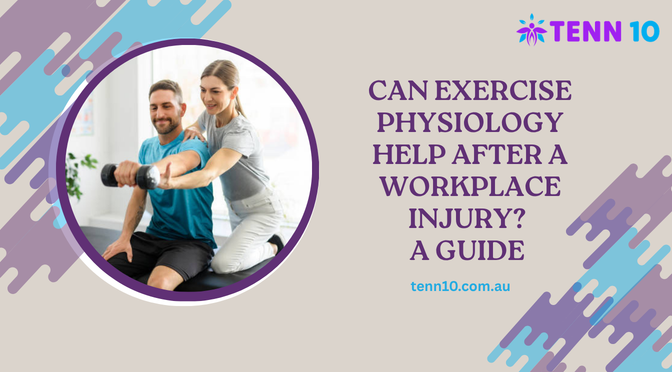
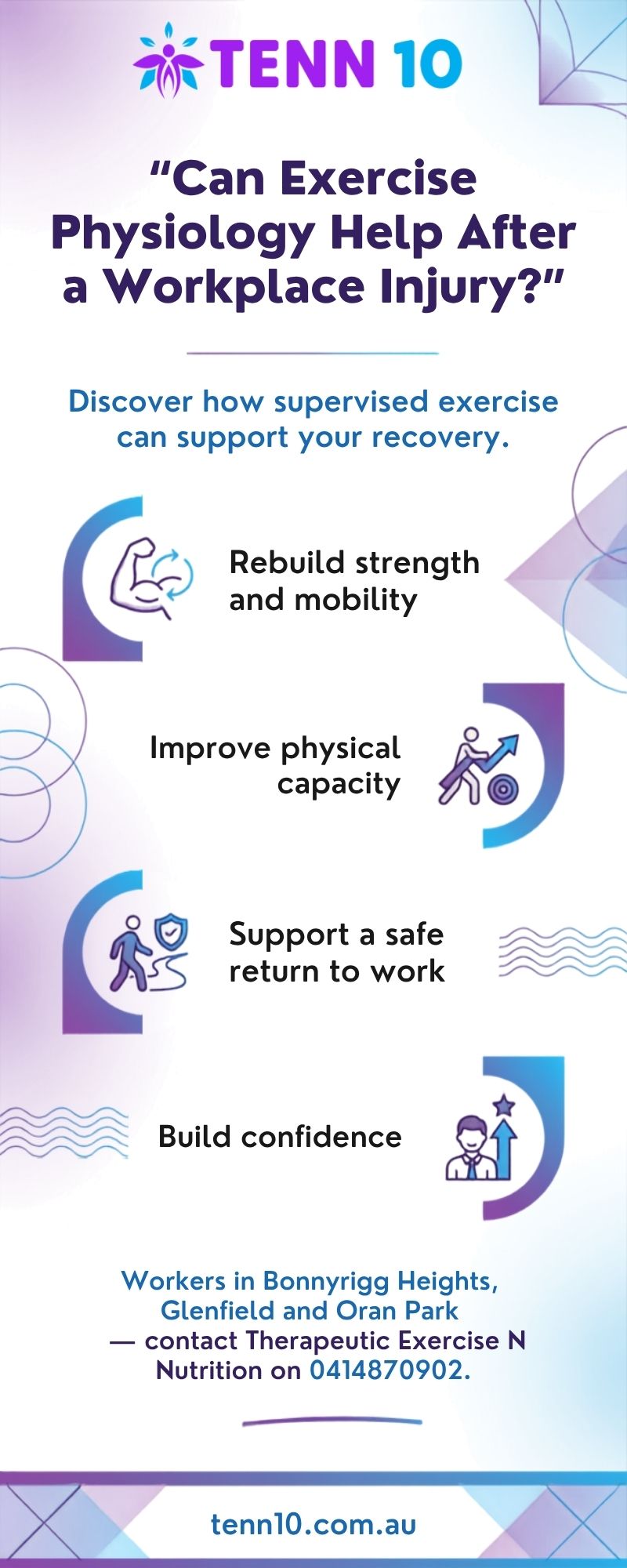
Recovering from a workplace injury can involve more than simply resting until pain improves. Depending on the nature of the injury, a structured rehabilitation program may help you rebuild strength, mobility, confidence and physical capacity.
Exercise physiology can play a valuable role in this process. For workers in Bonnyrigg Heights, Glenfield and Oran Park, an Accredited Exercise Physiologist (AEP) can develop an exercise program that considers your injury, current abilities and rehabilitation goals.
What Is Exercise Physiology?
Exercise physiology uses structured physical activity to support health, physical function and rehabilitation. An AEP has specialised training in designing exercise programs for people managing injuries, health conditions or reduced physical capacity.
After a workplace injury, an exercise physiologist can assess your current movement and fitness levels before developing an appropriate program. The exercises can then be adjusted as your capacity improves.
How Can It Help With Workplace Injury Recovery?
Workplace injuries can affect strength, flexibility, balance, endurance and confidence. Avoiding movement completely for too long may also make it harder to return to normal activities.
A supervised program by an exercise physio in Bonyrigg Heights and other mentioned regions can gradually introduce appropriate movements and physical challenges. Depending on the injury and professional recommendations, this may help improve muscle strength, joint mobility, cardiovascular fitness and functional capacity.
The aim is not to push through pain or rush recovery. Instead, exercise should be appropriately selected and progressed according to your individual circumstances.
Supporting a Safe Return to Work
Returning to work after an injury can be challenging, particularly when your role involves lifting, standing, walking, repetitive movements or other physical demands.
Exercise physiology may help prepare your body for these requirements by incorporating functional exercises that reflect relevant workplace activities. Building physical capacity progressively can help you work towards your rehabilitation goals.
Your exercise physiologist can also communicate with other members of your rehabilitation team when appropriate, helping ensure exercise recommendations align with your broader recovery plan.
What Happens During an Assessment?
An initial assessment generally involves discussing your injury, medical history, current physical abilities and goals. Your exercise physiologist may also assess factors such as movement, strength, balance, flexibility and exercise tolerance.
This information helps establish an appropriate starting point. Your program can then be modified as your condition and capabilities change.
You should always provide your exercise physiologist in Glenfield or the other mentioned regions with relevant information about your injury and any restrictions or recommendations provided by your treating healthcare professionals.
Can Exercise Physiology Help With Confidence?
A workplace injury can sometimes make people hesitant about returning to physical activities. Fear of reinjury or uncertainty about what movements are safe may affect confidence.
A gradual, supervised exercise program can provide an opportunity to practise movements in a controlled environment. As physical capacity improves, some people may also become more confident about performing everyday and work-related activities.
Is Exercise Physiology Suitable for Every Injury?
Not every injury requires the same rehabilitation approach. Exercise physiology may be useful for many musculoskeletal and physical capacity concerns, but suitability depends on the individual and the nature of the injury.
An exercise physio in Oran Park or the other mentioned regions can work within their professional scope and, where necessary, alongside physiotherapists, doctors and other healthcare professionals. Your treating team can help determine whether exercise physiology is appropriate for your recovery.
Finding Exercise Physiology Support in South-West Sydney
If you are recovering from a workplace injury in Bonnyrigg Heights, Glenfield or Oran Park, professional exercise physiology may form part of a broader rehabilitation strategy.
The right program should be individualised, progressive and focused on practical goals. Rather than returning to activity too quickly or avoiding movement indefinitely, appropriate exercise can help you work towards improved physical capacity and a confident return to everyday life and work.
Take the Next Step in Recovery
Working towards recovery after a workplace injury? Individualised exercise physiology support can help you build capacity safely and confidently across Bonnyrigg Heights, Glenfield and Oran Park. For that, contact Therapeutic Exercise N Nutrition today. Call 0414870902 now for a discussion.
How soon after a workplace injury can exercise physiology begin?
The appropriate timing depends on the injury and your treatment plan. Your healthcare team can advise when structured exercise is suitable.
Can exercise physiology support workers with physically demanding jobs?
Yes. Programs can focus on physical capacities relevant to your role, such as lifting, carrying, endurance, balance and repetitive movement.
Does exercise physiology replace physiotherapy after an injury?
No. Exercise physiology and physiotherapy have different roles and may complement each other as part of a broader rehabilitation plan.
How often should I see an exercise physiologist during rehabilitation?
The recommended frequency varies according to your injury, goals, exercise program and stage of recovery.
Can an exercise physiologist help monitor progress towards returning to work?
Yes. They can monitor changes in physical capacity and exercise tolerance and provide relevant progress information to your rehabilitation team.

